
Why the Indoor vs Outdoor LED Display Decision Matters
When Malaysian businesses begin researching visual communication technology, one of the first decisions they face is choosing between an indoor vs outdoor LED display. While both share the same fundamental technology of light-emitting diodes producing dynamic visuals, the engineering differences are significant. Choosing the wrong type leads to premature failure, wasted investment, and disappointing visual performance. Understanding the essential differences helps businesses make informed decisions that deliver lasting value. This comprehensive guide breaks down the eight most important distinctions every smart buyer must know.
Difference 1: Brightness Levels Make a Major Impact
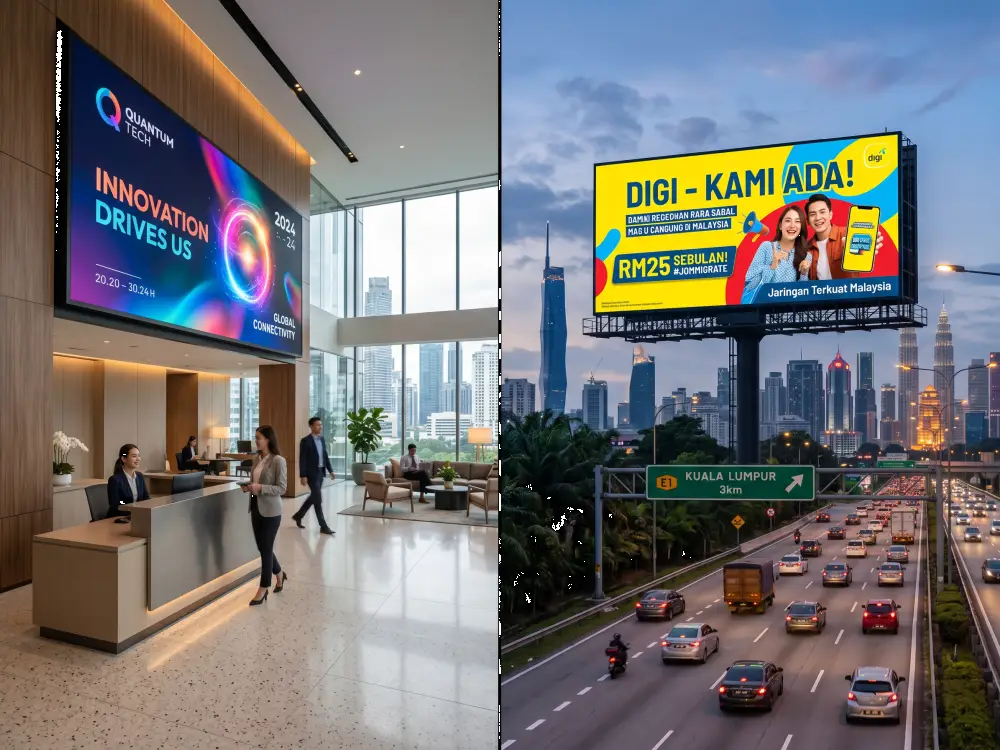
The most noticeable difference in the indoor vs outdoor LED display comparison is brightness. Indoor units typically produce between 600 and 1,500 nits, which is comfortable for the human eye in controlled lighting environments such as offices, lobbies, and retail spaces. Outdoor variants must overcome direct sunlight and produce brightness levels between 5,000 and 10,000 nits. Installing an indoor panel outdoors results in washed-out, unreadable content during daylight hours, while installing an outdoor unit indoors causes severe eye strain and unnecessary energy consumption.
Difference 2: Weatherproofing and IP Rating Standards
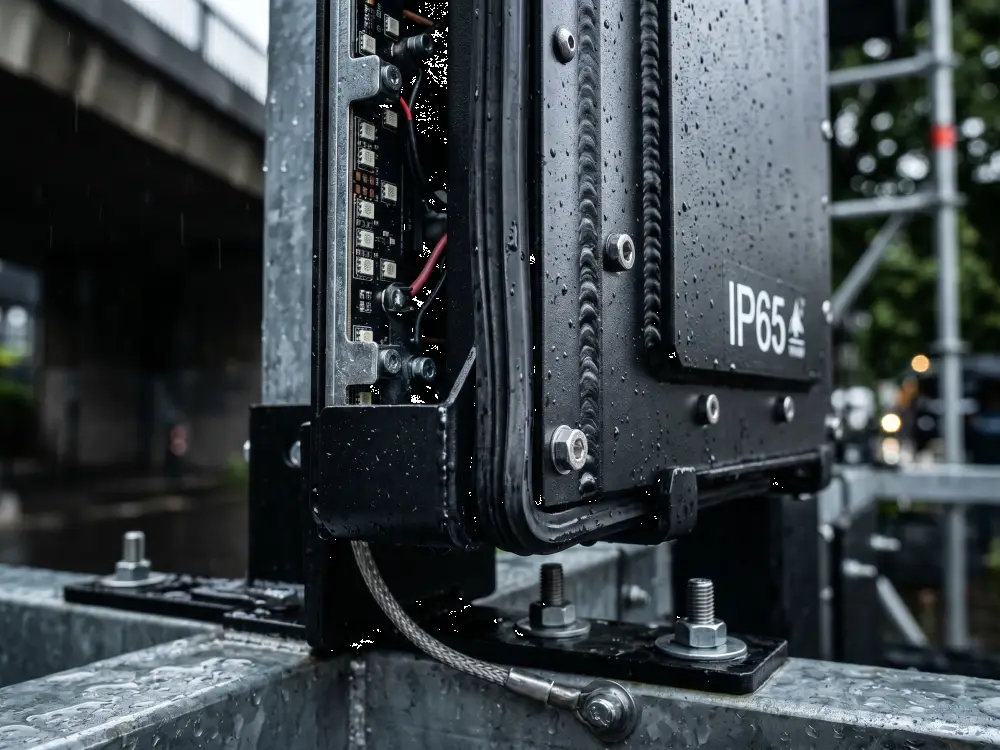
When evaluating indoor vs outdoor LED display options, weatherproofing is critical. Outdoor units must survive harsh tropical weather including monsoon rains, intense humidity, dust, and UV radiation. To handle these challenges, outdoor LED displays feature IP65-rated cabinets that are completely sealed against dust and resistant to water jets from any direction. Premium outdoor displays also include corrosion-resistant coatings and lightning protection systems. Indoor LED displays typically carry only IP30 or IP40 ratings, providing minimal moisture protection — entirely unsuitable for any outdoor or semi-outdoor installation in Malaysian conditions.
Difference 3: Pixel Pitch and Viewing Distance Requirements
Pixel pitch is a defining factor in the indoor vs outdoor LED display comparison. It refers to the distance between adjacent LED pixels and directly determines image sharpness and minimum viewing distance. Indoor LED displays use fine pixel pitches ranging from P1.2 to P3, designed for close-range viewing between one and five meters. Outdoor LED displays use larger pixel pitches between P4 and P10, optimized for viewing distances of five to fifty meters or more. This difference exists because outdoor viewers stand much further away, making fine pixel detail unnecessary while requiring larger pixels to maintain brightness across great distances.
Difference 4: Cabinet Construction and Build Quality
The physical construction of an indoor vs outdoor LED display differs significantly. Indoor units feature lightweight aluminum cabinets that are easy to mount on walls, ceilings, or hanging structures, with most panels weighing under ten kilograms. Outdoor cabinets are built from heavy-duty steel or reinforced aluminum to withstand wind loads, vibration, and structural stress over many years. Outdoor cabinets also include sophisticated thermal management systems with cooling fans or heat sinks to handle the additional heat generated by higher brightness levels and direct sunlight exposure.
Difference 5: Power Consumption and Heat Management
Higher brightness comes with higher power consumption, making this a key factor in the indoor vs outdoor LED display decision. Indoor LED displays typically consume between 200 and 400 watts per square meter, while outdoor displays consume 400 to 800 watts per square meter or more. This difference requires entirely different electrical infrastructure planning. Outdoor installations often need dedicated electrical circuits, voltage stabilizers, and surge protection systems. Heat management is also more challenging outdoors, requiring sophisticated ventilation, thermal sensors, and sometimes active cooling systems to prevent component degradation.
Difference 6: Installation Complexity and Permits
Installing an indoor LED display in a corporate lobby or meeting room is relatively straightforward, typically completed in one to three days with standard wall-mounting hardware. Outdoor LED display installation in the indoor vs outdoor LED display spectrum is significantly more complex, involving structural engineering analysis, custom steel mounting frames, weatherproof cable conduits, and often local authority permits from councils such as DBKL, MBPJ, or MPSJ. Outdoor billboard installations may take several weeks from site survey to commissioning, including the permit approval process.
Difference 7: Application and Use Case Suitability
Each type in the indoor vs outdoor LED display category serves distinctly different purposes. Indoor LED displays excel in corporate lobbies, meeting rooms, retail stores, broadcast studios, mosque interiors, classroom video walls, and event halls. They prioritize image clarity, color accuracy, and seamless aesthetics. Outdoor LED displays dominate roadside billboards, building facade displays, stadium scoreboards, outdoor concert stages, and mosque exterior installations. They prioritize visibility, durability, and broadcast reach over fine detail. Choosing based on intended use case is critical for project success.

Difference 8: Maintenance Requirements and Lifespan
Both types in the indoor vs outdoor LED display comparison offer impressive lifespans, but their maintenance needs differ. Indoor displays require minimal upkeep — typically quarterly visual inspections and annual dust cleaning. Outdoor displays demand more rigorous maintenance schedules including waterproof seal inspections, corrosion checks, cooling system servicing, and structural integrity verification. Outdoor displays also degrade slightly faster due to UV exposure and thermal cycling, with typical lifespans of 80,000 hours compared to 100,000 hours for well-maintained indoor displays.
How to Choose the Right LED Display for Your Project
Choosing between an indoor vs outdoor LED display starts with honestly evaluating your installation environment. Ask yourself whether the location experiences any direct sunlight, rain, or humidity exposure. Even covered walkways, semi-outdoor lobbies, and atriums with skylights count as outdoor environments for LED purposes. Next, measure the typical viewing distance between your audience and the display to determine appropriate pixel pitch. Finally, consider your content strategy — fine details and text-heavy content suit indoor fine-pitch displays, while bold visuals and brand graphics work beautifully on larger-pitch outdoor units.
Final Thoughts on Indoor vs Outdoor LED Display Selection
Understanding the essential differences between indoor vs outdoor LED display technology is the foundation of any successful visual communication project. From brightness levels and weatherproofing to pixel pitch, installation complexity, and long-term maintenance, each factor plays a critical role in determining which type best suits your business needs. Investing time to make an informed decision protects your investment and ensures your LED display delivers maximum impact for years to come. Working with an experienced local supplier who conducts proper site surveys and recommends the right specifications is the smartest path to a successful outcome.