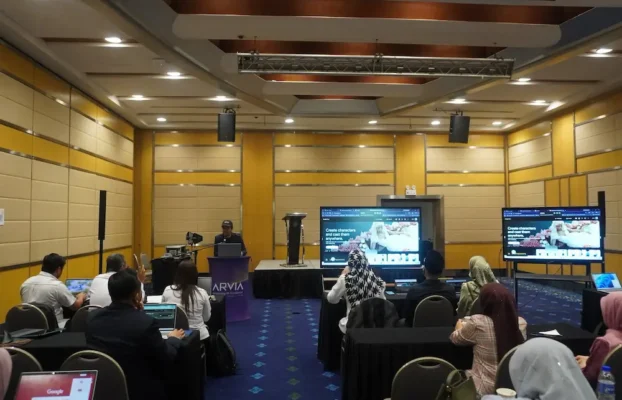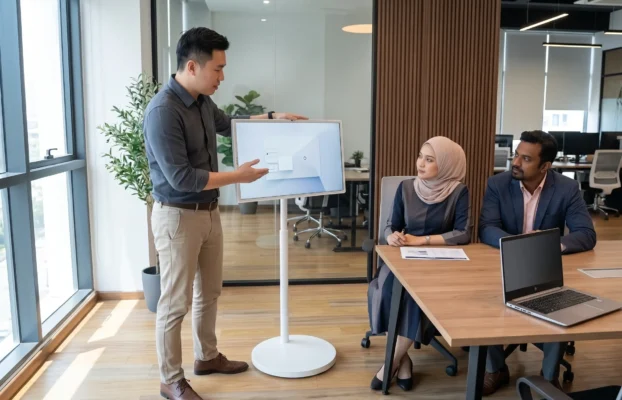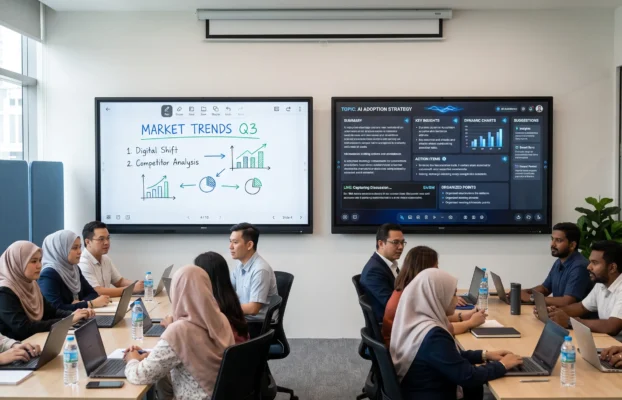
A smartboard for masjid can support religious learning, committee meetings and community programmes through one interactive display. Instead of depending on separate projectors, whiteboards and presentation devices, mosque teachers and committee members can open materials, write notes, display videos and share information directly from the touchscreen.
The purpose of a smartboard is not to replace traditional teaching methods. It gives the presenter a clearer and more flexible way to explain content. In a Malaysian mosque, the same screen may be used for weekly kuliah, Quran classes, AJK meetings, volunteer training and hybrid programmes.
What Is a Smartboard for Masjid?
A smartboard is a large interactive display that responds to touch. It combines presentation, writing, internet access and multimedia functions within one screen. Similar to an interactive whiteboard, users can write, draw, highlight and control digital content without constantly returning to a computer.
A smartboard for masjid may be installed in a lecture room, meeting room, classroom or multipurpose area. The most suitable screen size depends on the room dimensions, seating arrangement and viewing distance. The equipment should also be simple enough for mosque officers, ustaz, volunteers and guest speakers to operate.
Mosque committees considering a broader technology plan can also read the guide on seven essential technologies for Masjid Digital Malaysia.
7 Practical Uses of Smartboard for Masjid
1. Interactive Kuliah and Religious Classes
During a kuliah, an ustaz can display presentation slides, diagrams, reference materials and educational videos on one screen. Important points can be highlighted directly while the session is taking place. Notes written on the board may also be saved for later reference, depending on the application being used.
This creates a structured learning environment without making the lesson feel overly technical. The smartboard simply gives the teacher more ways to explain a topic clearly.
2. Quran and Tajwid Learning
A smartboard can display digital learning materials at a larger size, helping participants follow the teacher’s explanation. Tajwid colour references, pronunciation videos and supporting notes can be presented clearly to a group.
The teacher can zoom into specific sections, add annotations and replay audio references when needed. Religious content should always be prepared and reviewed carefully so that the digital presentation remains accurate and respectful.
3. AJK and Committee Meetings
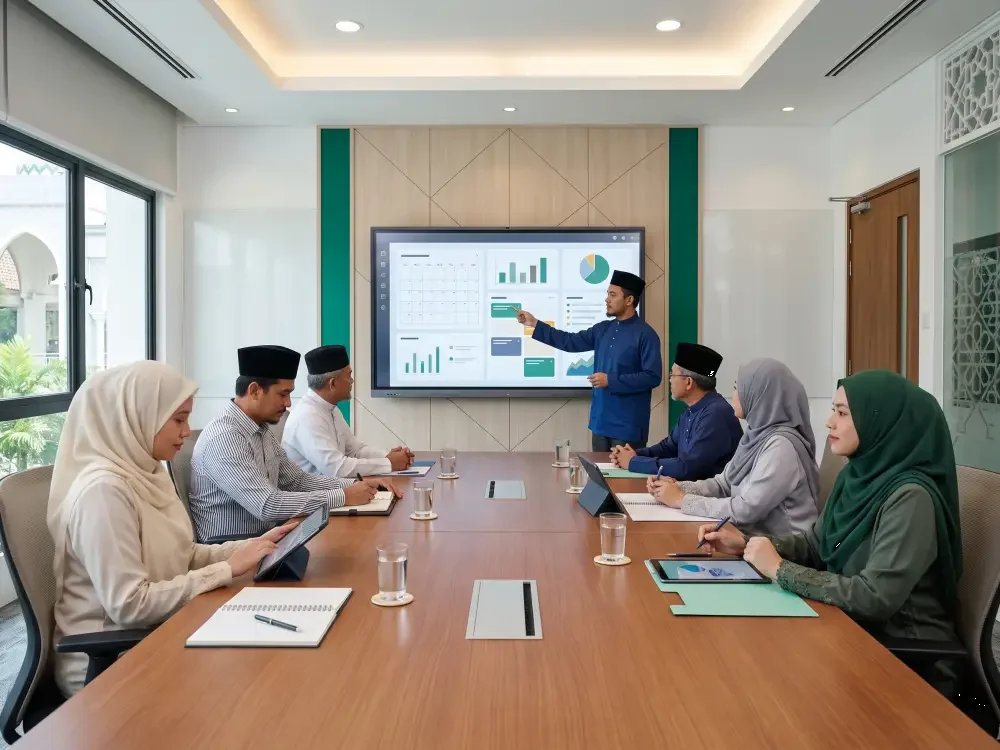
Mosque committees frequently discuss finances, event schedules, maintenance, welfare programmes and volunteer responsibilities. A smartboard for masjid allows the committee to display documents, review spreadsheets, annotate plans and update tasks during the meeting.
Everyone can view the same information clearly, reducing dependence on printed documents or small laptop screens. The display can also support remote attendees through video conferencing.
4. Hybrid Kuliah and Remote Speakers
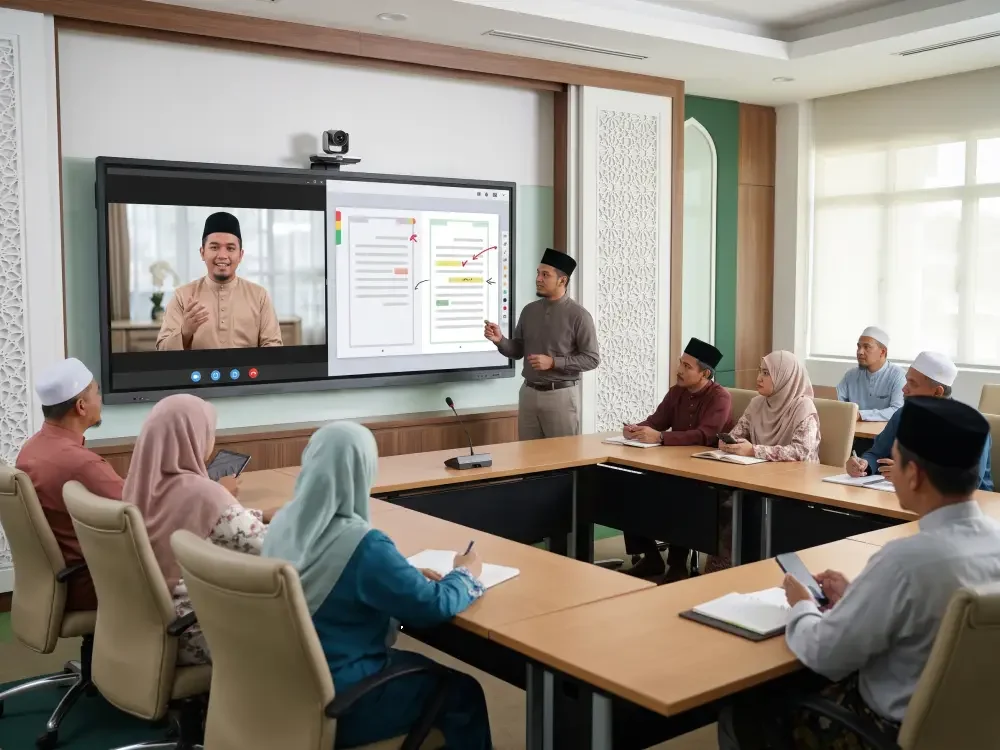
A guest speaker may not always be able to travel to the mosque. With a camera, microphone and internet connection, the smartboard can become the main display for a hybrid kuliah or online discussion.
Participants in the room can see and hear the remote speaker clearly, while the speaker can respond to questions from the audience. The same setup may be used for training, inter-mosque discussions and community programmes involving speakers from another state.
5. Youth and Community Programmes
Mosques frequently organise programmes for children, teenagers, parents and the surrounding community. A smartboard can support workshops, educational quizzes, career talks, volunteer briefings and digital literacy sessions.
Interactive activities can encourage participants to contribute directly instead of only watching a presentation. The presenter may invite participants to answer questions, organise ideas or complete an activity on the screen.
6. Volunteer and Staff Training
Mosque officers and volunteers may require training before Ramadan programmes, donation campaigns, large events or emergency procedures. A smartboard allows trainers to present guidelines, demonstrate workflows and review responsibilities with the team.
Training materials can be reused and updated without printing a new set of documents for every session. This supports a more organised and consistent briefing process.
7. Programme Planning and Presentations
Before launching a new programme, the committee can use the smartboard to review timelines, layouts, task assignments and presentation materials. During the actual event, the same display may show welcoming slides, speaker content, schedules or supporting multimedia.
Using one system for both preparation and delivery gives the mosque more value from its technology investment.
Benefits of Using a Smartboard in a Mosque
- Combines presentation, writing and multimedia functions in one display.
- Produces a bright image without requiring the room to be darkened.
- Supports direct writing, annotation and content navigation through touch.
- Can be used by religious teachers, committee members and guest speakers.
- Supports physical, hybrid and remote learning activities.
How to Choose a Smartboard for Masjid
Start by identifying where the screen will be installed and how many people normally use the room. A smaller lecture room may need a different screen size from a large multipurpose hall. Viewing distance, wall structure, seating layout and available power connections should be checked before installation.
The committee should also decide whether it needs Android functions only or a Windows-based setup for specialised software. Camera, microphone and speaker requirements should be included when hybrid programmes are planned.
Warranty, installation, user training and technical support are also important considerations. Where required, mosque committees can request information on suitable interactive smartboard solutions and available SIRIM-certified options.
Israk Smartboard Solutions for Mosques in Malaysia
Israk Solutions provides interactive smartboards and supporting audio-visual systems for mosque learning rooms, meeting areas and multipurpose spaces. Solutions can be planned according to room size, programme requirements and preferred operating system.
Relevant implementations include an AI smartboard deployment at Masjid Jamek Al-Ikhwan and an interactive smartboard solution for Masjid Taman Temerloh Jaya. These examples show how the display can support learning and mosque administration without requiring an excessive technology setup.
Frequently Asked Questions
What size smartboard is suitable for a mosque?
The suitable size depends on room dimensions, viewing distance and audience capacity. A site assessment helps identify whether a 65-inch, 75-inch or larger display is appropriate.
Can a smartboard display Quran learning materials?
Yes. The screen can display approved digital learning materials, videos, audio references and tajwid guides. All religious content should be reviewed for accuracy before being presented.
Can a smartboard be used for hybrid kuliah?
Yes. A camera, microphone, speaker and stable internet connection can be added to support remote speakers and online participants.
Is training provided after installation?
User training is recommended so mosque officers, teachers and committee members can operate the smartboard confidently. Training scope should be confirmed with the supplier before purchase.
Plan a Smartboard Setup for Your Mosque
Share your room size, programme requirements and preferred setup with the Israk team.
Final Thoughts
A smartboard for masjid can support more than presentations. It can help religious teachers explain learning materials, enable organised committee meetings, connect remote speakers and support programmes for the surrounding community.
The most suitable solution is one that matches the mosque’s room, audience and actual programme requirements. By beginning with a clear purpose and a practical setup, the committee can introduce digital learning gradually while maintaining a respectful and welcoming mosque environment.