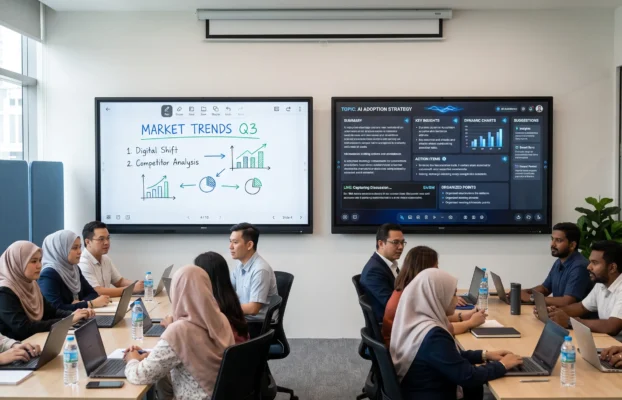
Having worked with university educators across Malaysia for years in deploying interactive display technology, I have observed one consistent pattern — the lecturers who adopt the smartboard most enthusiastically are invariably those who were most sceptical before their first hands-on session. The technology does not require a change in teaching philosophy; it amplifies the quality of whatever teaching approach a lecturer already uses. This guide shares the expert perspective on why a smartboard is the single most impactful technology investment a Malaysian university can make for its teaching spaces.
Why University Educators in Malaysia Need a Smartboard Now
The Malaysian higher education landscape has changed permanently. Student expectations shaped by constant digital interaction, the mainstreaming of hybrid learning models, and institutional pressure to deliver measurably better learning outcomes have collectively made the traditional projector-and-whiteboard setup inadequate for the demands of contemporary university teaching.
A smartboard addresses every dimension of this challenge simultaneously — improving content delivery quality, enabling genuine hybrid accessibility, reducing lecturer preparation overhead, and creating the kind of active learning environment that educational research consistently identifies as the most effective model for long-term knowledge retention.
Israk Solutions has deployed smartboard solutions across multiple Malaysian universities and institutions of higher education. For full details, visit the Israk Solutions Smartboard page.
Tool 1: Delivering Multimedia-Rich Lectures That Students Remember
The cognitive science of learning is unambiguous on this point — students retain significantly more from lessons that engage multiple sensory channels simultaneously than from those that rely exclusively on verbal instruction or static text. A smartboard gives lecturers the tools to deliver genuinely multimedia-rich sessions as a natural part of their teaching flow.
Video demonstrations, interactive simulations, live web content, and annotated diagrams can all be accessed, displayed, and marked up directly on the smartboard without switching between devices or disrupting the session’s momentum. The result is lectures that are more engaging, more memorable, and more effective at building the deep understanding that university education should develop.
Tool 2: Real-Time Annotation That Makes Complex Concepts Accessible
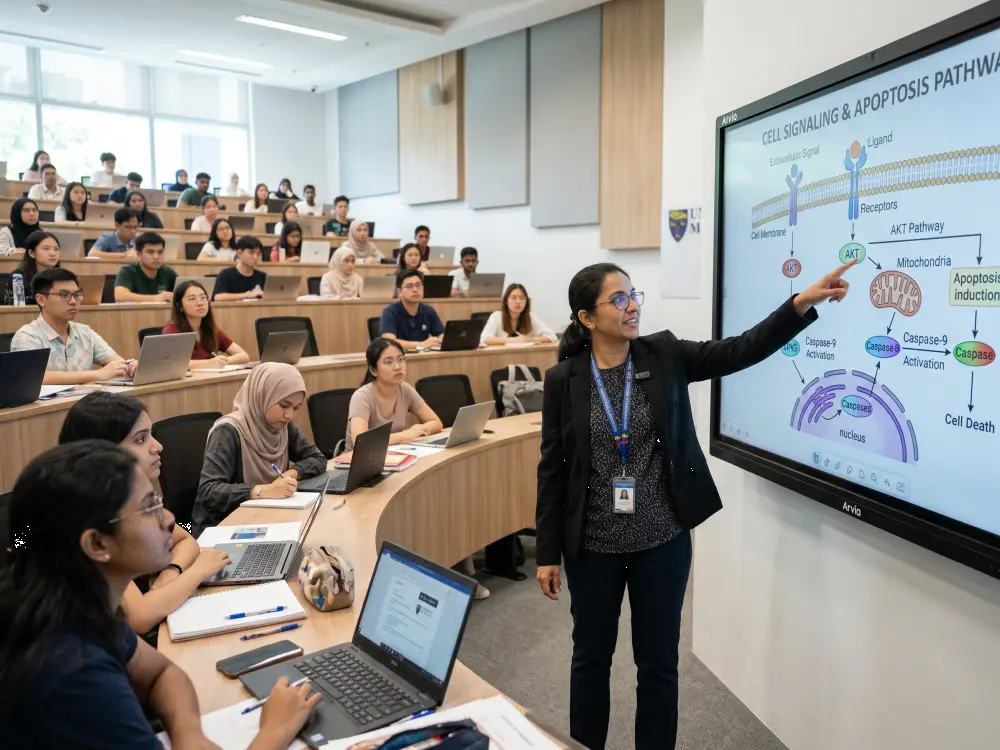
One of the most powerful teaching techniques available to university lecturers — and one that the smartboard enables with exceptional elegance — is real-time visual annotation of complex material. The ability to draw over a diagram as you explain it, circle the critical variable in an equation as you discuss it, or layer additional information onto a base image as the explanation develops is pedagogically far more effective than presenting a static finished diagram.
From my deployment experience, I consistently observe that the annotation capability of the smartboard is the feature that lecturers value most highly after they have used it in real teaching sessions. It changes the dynamic of explanation in ways that are immediately felt by students.
Tool 3: Seamless Hybrid Lecture Delivery
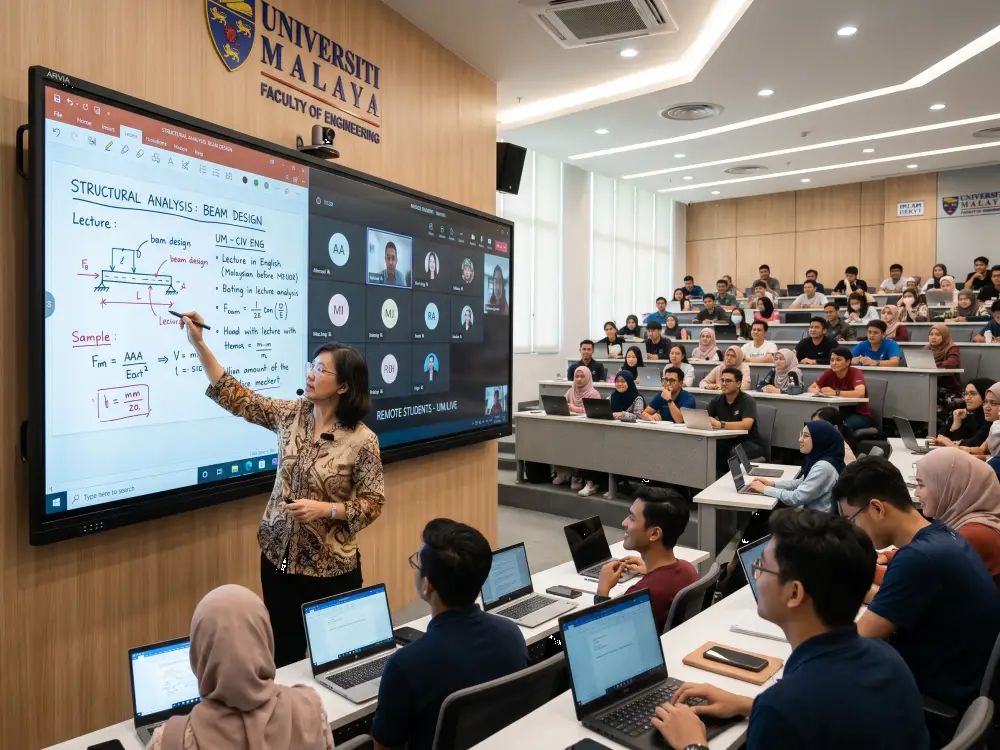
The expectation that universities deliver consistent quality to both in-room and remote students simultaneously is now a standard institutional requirement across Malaysian higher education. The smartboard’s built-in AI camera with auto-framing and noise-cancelling microphone array enables hybrid lecture delivery that genuinely serves both audiences — without requiring a dedicated AV technician, a separate camera operator, or complex pre-session configuration.
The camera tracks and frames the lecturer automatically as they move across the front of the room, while the microphone array captures clear audio regardless of room acoustics. Remote students experience the lecture with a quality of access that approaches — and in some dimensions exceeds — the in-room experience.
Tool 4: Instant Session Recording and Distribution
Malaysian universities are increasingly expected to provide recorded lecture content for revision, accessibility, and flexible learning purposes. A smartboard simplifies this requirement to the point where it creates no additional workload for the lecturer. Sessions record automatically, and content — including live annotations made during the lecture — is captured alongside audio and video for distribution through the university’s learning management system.
Tool 5: Student Participation at the Board
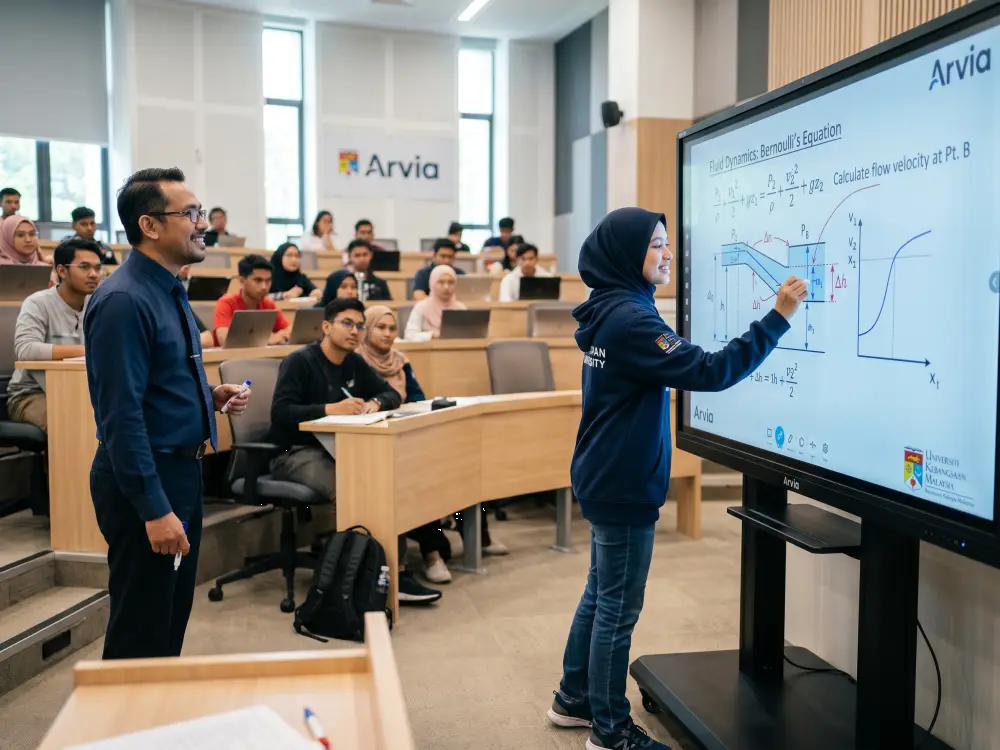
Active learning — where students engage directly with content rather than passively receiving it — produces measurably better outcomes than passive instruction. A smartboard creates a natural and unintimidating channel for student participation at the front of the lecture hall, inviting students to interact directly with lesson content in ways that build confidence as well as knowledge.
Tool 6: Saving and Sharing All Session Content Automatically
Every annotation, diagram, and note created during a smartboard session is saved automatically and can be shared with all students within seconds of the session ending. This eliminates the most common post-lecture complaint from Malaysian university students — that they missed critical content while trying to copy notes from a board that was erased before they finished writing.
The Smartboard Is the Modern Lecturer’s Most Reliable Ally
For Malaysian university educators navigating the convergence of rising student expectations, hybrid delivery requirements, and institutional accountability for learning outcomes, the smartboard is not an optional technology enhancement — it is the foundational tool that makes meeting all of these demands simultaneously achievable. Institutions that equip their teaching spaces with quality interactive display technology today are investing in the capability of their educators and the outcomes of their students in the most direct and practical way possible.