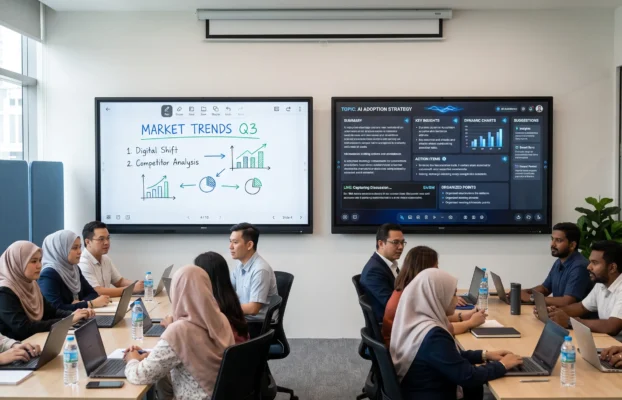
Drawing on extensive experience designing and deploying meeting room technology solutions for Malaysian corporate clients, I can tell you that the biggest misconception about smart meeting rooms is their perceived complexity. Organisations often delay this investment because they assume it requires a lengthy IT project, significant disruption to operations, and ongoing technical management overhead. In reality, a well-planned smart meeting room deployment is straightforward, fast, and immediately impactful. This guide walks you through the intelligent approach.
Why Malaysian Offices Are Investing in Smart Meeting Rooms Now
The meeting room is the most operationally critical shared space in any Malaysian office — and it is also, in many organisations, the most poorly equipped. The gap between the quality of technology that Malaysian professionals use individually on their personal devices and the quality of technology available in their shared meeting rooms has widened dramatically in recent years.
Closing this gap through a smart meeting room investment delivers immediate, visible, and measurable returns — in meeting efficiency, hybrid collaboration quality, and the professional impression created for clients and partners who visit the space.
Israk Solutions designs and deploys smart meeting room solutions for corporate offices across Malaysia. Visit the Israk Solutions Smart Meeting Room page for full details.
Step 1: Start with the Right Interactive Display
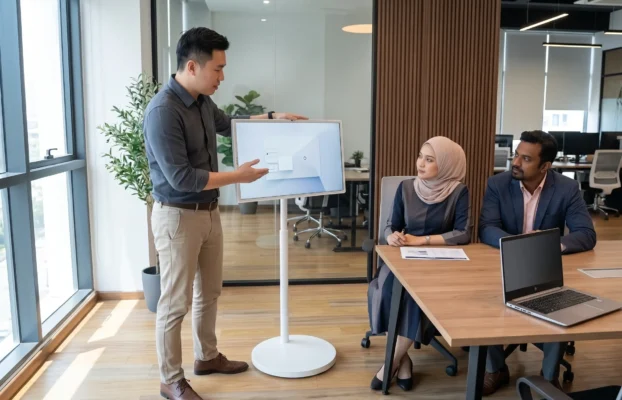
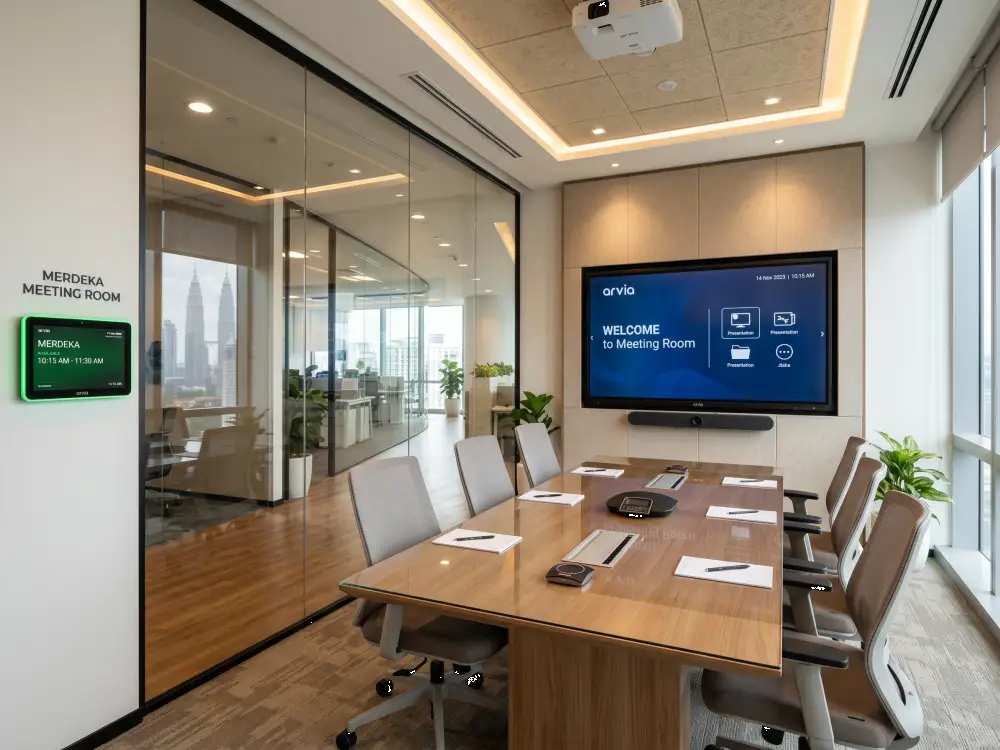
Every smart meeting room I have designed begins with the same foundhttps://www.israk.my/smart-meeting-room/ation — selecting the right interactive display for the specific room dimensions and use case. For standard Malaysian office meeting rooms accommodating 6 to 10 participants, a 75-inch or 86-inch Arvia ARV600 smartboard is the optimal choice — large enough for comfortable viewing from every seat, capable enough to handle every meeting format, and intuitive enough for every team member to operate confidently without training.
The ARV600 integrates video conferencing, wireless screen sharing, digital whiteboarding, and 4K display capability in a single device — replacing four separate technology components with one unified platform.
Step 2: Configure Built-In Video Conferencing for Hybrid Teams
The most immediate quality-of-life improvement a smart meeting room delivers for Malaysian teams is the elimination of the “can everyone hear me?” problem. Built-in AI noise cancellation, auto-framing camera, and professional speaker systems — all integrated within the ARV600 — ensure that every hybrid meeting delivers clear audio and video for remote participants from the moment the session starts, without any configuration required.

Step 3: Enable Seamless Wireless Screen Sharing
A smart meeting room where participants spend two minutes finding the right cable before sharing their screen is not living up to its potential. Configuring wireless screen sharing from the outset — supporting all device types and operating systems simultaneously — ensures that content flows freely between participants without friction, keeping meetings focused and productive.
Step 4: Mount a Digital Booking Panel Outside Every Room
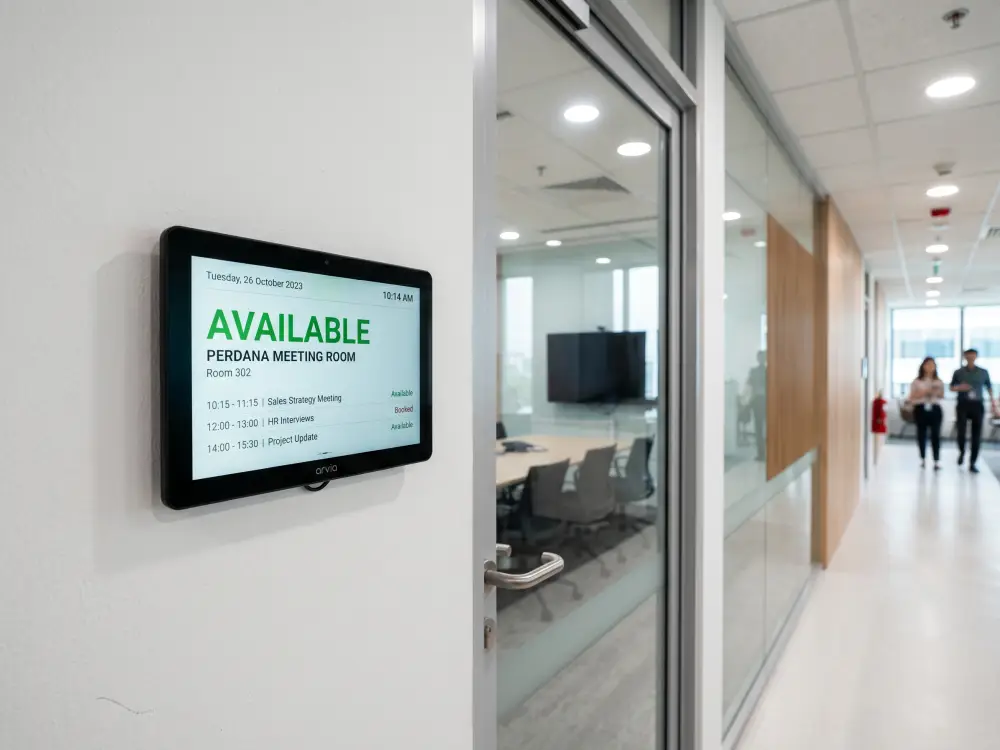
The room booking panel is the component that transforms a technology-equipped meeting room into a genuinely smart space. When staff can see real-time room availability at a glance, book a room instantly from outside the door, and rely on the system to release unclaimed bookings automatically, the chronic inefficiency of meeting room management becomes a solved problem rather than a daily frustration.
Israk Solutions installs booking panels that integrate directly with Microsoft Outlook and Google Calendar — ensuring that the physical and digital scheduling systems remain perfectly synchronised at all times.
Step 5: Integrate with Your Existing Productivity Platforms
A smart meeting room that requires staff to learn new applications or change their existing workflow will face adoption resistance. The most successful smart meeting room deployments I have managed are those where the technology integrates seamlessly with the platforms teams already use — Teams, Zoom, Outlook, Google Calendar — making the smart meeting room feel like a natural extension of the existing digital work environment rather than a separate system to learn.
Step 6: Invest in a Proper User Training Session
The final step — and the one most commonly skipped — is a structured user training session for every team member who will use the smart meeting room. Twenty minutes of hands-on guided experience with the key functions eliminates the hesitation and workarounds that undermine adoption, and ensures that the full capability of the room is used from day one rather than gradually discovered over months.
A Smart Meeting Room Pays for Itself Quickly
For Malaysian organisations where meeting efficiency, hybrid collaboration quality, and professional presentation to clients all have measurable business value, the smart meeting room pays for itself faster than almost any other office technology investment. The combination of recovered meeting time, eliminated technical friction, and improved collaboration outcomes accumulates into a compelling return that organisations consistently report within the first year of deployment.